Jam Khalid · Founder-led climate change & agri-food systems consultancy
Architecting the climate-resilient field.
We help governments, UN agencies, NGOs and agribusinesses design, digitalise and scale Farmer Field Schools and climate-smart agriculture, built on 24 years of field work in Pakistan, Jordan and Lao PDR.
Empowering smallholders to observe, decide and lead change in their own fields.
24years of field practice
6,400+farmer & women’s field schools
150,000+farmers trained
66books & publications
Assignments delivered under programmes funded and administered by
Disclaimer: Organisations, programmes and projects are named only to identify where past assignments were delivered; this does not imply their endorsement of jamkhalid.com.
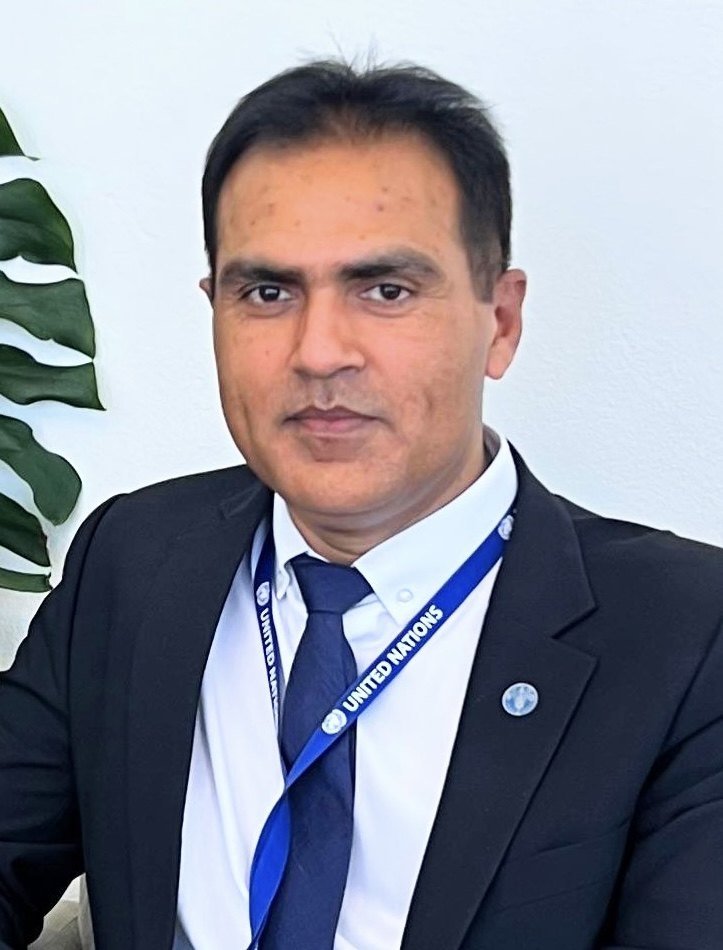
Jam Muhammad Khalidجام محمد خالدFounder & lead expert
About the firm
From the field school to the firm.
Jam Khalid is a consultancy firm registered with the Securities and Exchange Commission of Pakistan (SECP), founded and led by Jam Muhammad Khalid, an agriculturist and climate change specialist who began as an IPM and Farmer Field School facilitator in 2002. He has supervised 6,400+ farmer and women’s field schools, led US$10 million of climate-smart adaptation packages for about 200,000 households, trained ministry officers as lead Master Facilitator in Jordan, Pakistan and Lao PDR, and written 27 climate-smart technology catalogues among 66 publications.
As a registered company, Jam Khalid contracts directly with clients and partners and delivers its assignments independently, carrying that participatory discipline into digital services and technical advice that any programme can adopt.
Farmer Field SchoolsClimate-smart agricultureIntegrated pest managementAgroecologyAgri-financeDigital extensionGender mainstreaming
2 free apps for FFS practitioners and farmers, from the e-FFS Ecosystem.
Part of the e-FFS Ecosystem that JamKhalid.com built from 24 years of Farmer Field School practice. Free to use on any phone, online and offline. Explore the e-FFS Ecosystem →
Freee-FFS Ecosystem · Agri-business
ABC Planner
Design a climate-smart farm business plan on your phone, step by step.
Crops and livestock, costs and prices, climate-smart practices, then profit and cash flow, ready as a report to share with a lender, buyer or project.
Profit & cash flow
200+ climate-smart practices
Farm sketch by season
Report in 9 languages
For FFS graduate farmers and practitioners · web, Android and iPhone · 9 languages
With the support of FIDA, SOFT and FAST (Fakhri Agro-Services and Technologies)
Freee-FFS Ecosystem · Farm records
Farmer eDiary
Your farm records, now on your phone.
Money in and out, receipt photos, loans, agreements, crops and animals, with a farm summary and season ratings that show the real profit. Rain can take a notebook, not these records.
Money in & out
Farm summary
Loans & agreements
Works offline
For farmers, FFS groups and facilitators · web, Android and iPhone · 9 languages
A joint initiative of JamKhalid.com, FIDA and SOFT
Three ways to start.
Scope, duration and cost are agreed after a first conversation. There are no standard packages, because no two programmes are the same.
Entry point
Advisory sprint
Two to four weeks: a programme review, a curriculum check or a technical opinion that has to survive a donor review.
Most requested
Programme partnership
End-to-end design and delivery of an FFS or CSA programme, including digital tools, facilitator training and monitoring.
Long term
Retained advisor
Technical guidance across a programme cycle: monthly reviews, curriculum updates and field coaching.
Selected work
Track record in the field.
Assignments delivered by our founder for UN agencies, governments, donors and NGOs since 2000: field programmes, curricula, finance design, policy and digital tools.
References describe work led or delivered by Jam Muhammad Khalid in his roles with the organisations named.
Gallery
Where the work happens.
Field schools, facilitator training and partner workshops. Click a photo to see it full size.
Built from field evidence, then handed to programmes. Both are open for pilot partnerships.
Launching 2026 · 25 years of Farmer Field Schools
CSA Triple-Win Calculator
AgriClimate CBA, a cost-benefit app for climate-smart agriculture
Compares a climate-smart practice package with the farmer’s usual practice on the same plots, scores it on the three CSA pillars, and shows whether it pays.
1Productivity & income2Adaptation3Mitigation
142 CSA practicesIn 14 groups: water, soil health, adaptive varieties, IPM, agroforestry, livestock and fish, renewable energy, climate services, value chains and landscapes.
Does it pay?Net present value, benefit-cost ratio, internal rate of return and payback, with multi-year cash flow in the local currency.
Emissions and carbonIPCC Tier 1 estimates for methane, nitrous oxide and residue burning, plus guidance on readiness for voluntary carbon markets.
Climate riskA climate risk simulator and extreme-weather checks show how the package holds up under drought, heat and flood.
Built for the fieldFarmer-rated observations, voice field notes and offline maps. Works without a signal and syncs later.
Highly beneficialRaised beds + mulch vs farmer practice
1Productivity & income3.5/4
2Adaptation3.5/4
3Mitigation2.5/4
Weakest pillar: mitigation. Add residue retention to strengthen it.
NPV+412USD / ha
Benefit-cost1.9ratio
IRR34%per year
Payback1.6years
Incremental cash flow, 5 years
Y1Y2Y3Y4Y5
CSA packageFarmer practice
The package beats the farmer’s usual practice on all three pillars.
Farmer practice2,150
CSA package1,540
kg CO₂e per ha per season · IPCC Tier 1
Methane from flooding lowerNo residue burningNitrogen use downCarbon-market ready: 3 of 5 criteria
AssessPlotsResultsReport
App screens, illustration · sample values
Try the triple-win scoring
Yield, production cost and net income per unit area
Water use, soil quality, pest impact and recovery after weather stress
Greenhouse gas emissions, carbon storage, biodiversity and chemical inputs
This package Triple-win line (3 of 4 on every pillar)
–
Illustrative demo with a score out of 12. The app scores each pillar from farmer records and field observations (CSA-CBA Form 01 and Form 02).
In development · prototype 2023
e-FFS Ecosystem
Online learning support, monitoring, evaluation and networking for Farmer Field School programmes
A hybrid system that helps facilitators, managers and practitioners run Farmer Field Schools well, with every school, session and learning plot visible in one place. It is built to keep working when the signal does not.
Online M&E and impact dataReal-time informationOnline learning supportSelf-accountabilityEfficient and cost-effectiveSimple, interactive dashboard
Network directoryOrganisations, projects and facilitators, with roles for managers, supervisors, facilitators and co-facilitators.
Field school registryClimate Business Field Schools, Women Open Schools, demonstration plots and ToF, with village profile, crops, livestock, irrigation and GPS location.
Farmer membersProfiles with land holding and livestock, group leadership elections and sub-groups.
Sessions and attendanceSession plans, session reports and attendance for every meeting of the school.
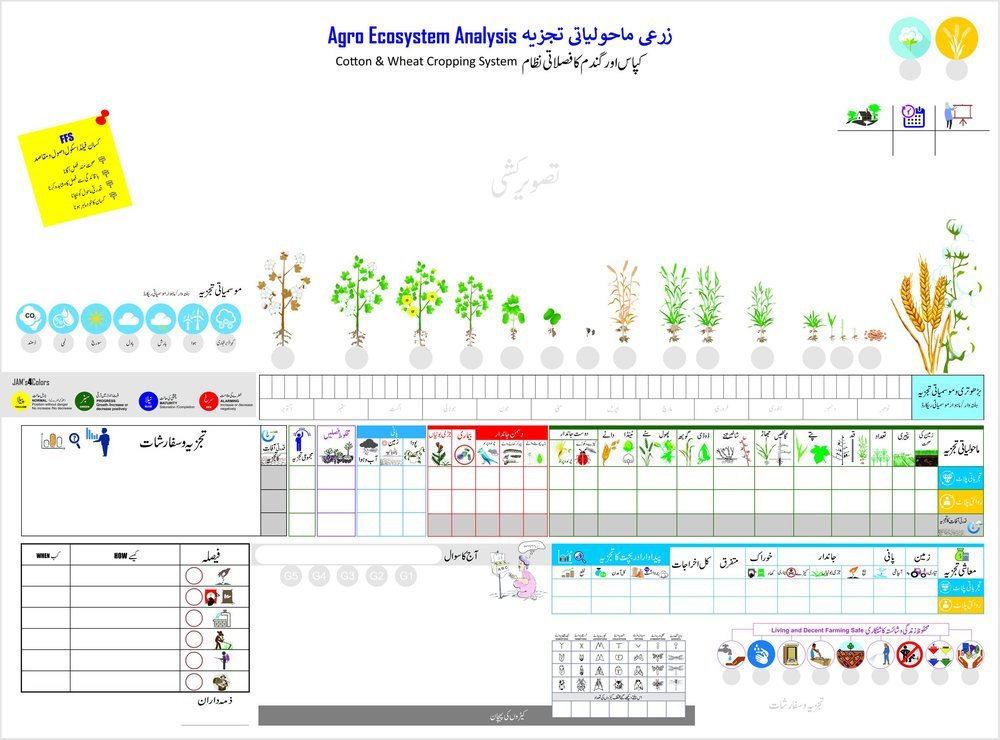
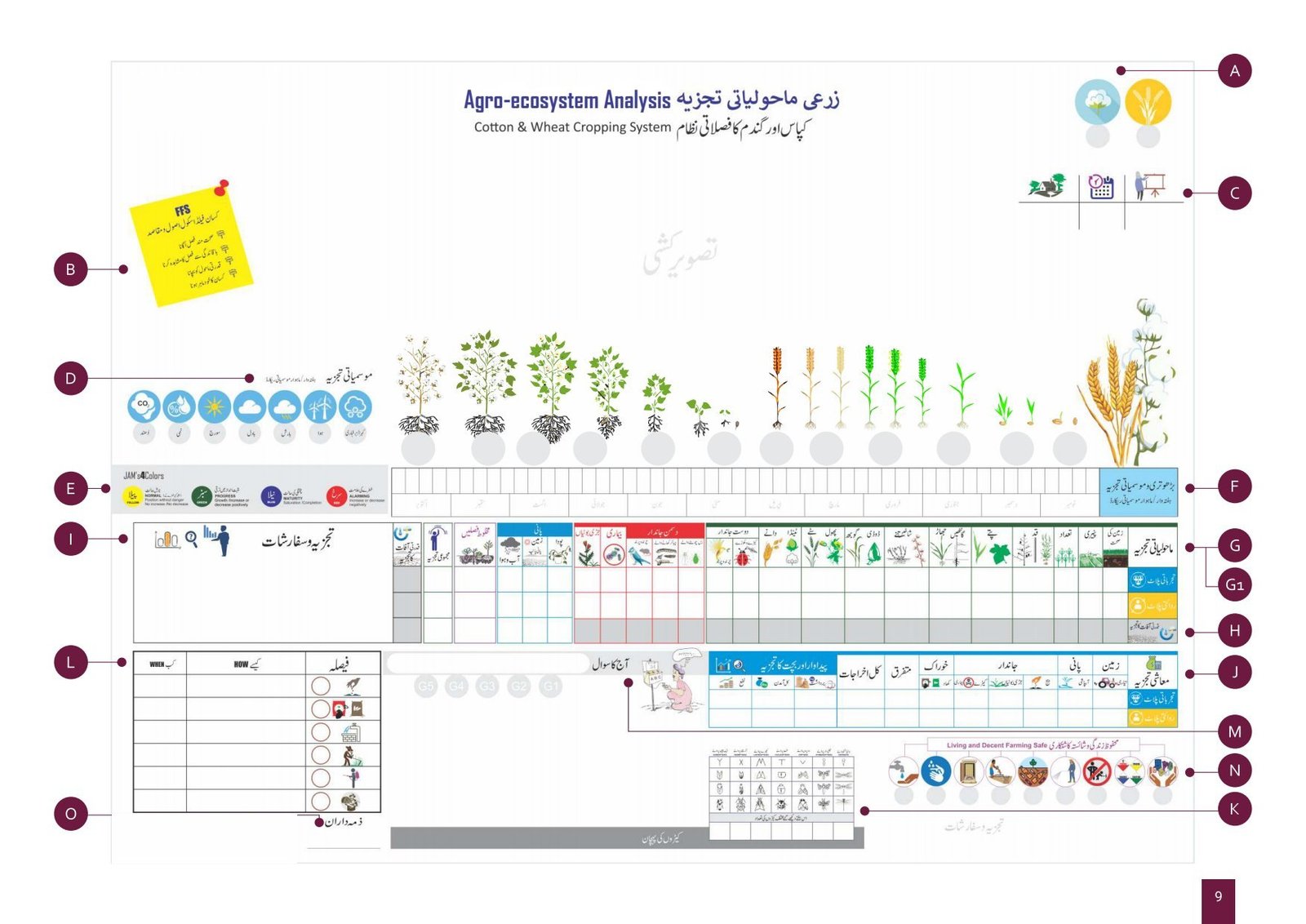
Digital AESAField observations, analysis and group decisions on water, weeds and pests, with photos of the AESA board.
Learning plots and experimentsLearning and control plots, field experiments such as minus-one-element tests, and cost-benefit analysis of every plot.
Farmer skillsPractical skills tracked by session: seed germination test, soil sampling, farm layout, weather forecasting, pest scouting and more.
17-step SOP trackerFrom area selection and Training of Facilitators to field days and exchange visits, each step with a checklist and evidence.
Learning and knowledgeKnowledge bank and online FFS courses, linked to the FAO Global FFS Platform.
Online curriculum builderDesign and adapt season-long FFS curricula online, session by session, for any crop or livestock system.
Climate-smart fertiliser calculatorNutrient doses matched to crop, soil and yield target, cutting cost and emissions.
Chat BoxGroup chat for the farmer members of each field school, and organisation-wide chat among facilitators, master facilitators and managers.
FFS community networkLinks members with graduates, facilitators and field schools across districts and countries.
Farmer’s digital diaryFarmers record field operations, costs and observations through the season.
Agribusiness plans onlineStep-by-step business plans for farmers and producer groups, ready to share with lenders and buyers.
Climate-smart marketplaceFarmers find and compare climate-smart tools, inputs and technologies from suppliers.
And moreNew services added as the Farmer Field School community asks for them.
Idea by Jam Muhammad Khalid. First prototyped in 2023 for the FAO–GCF project “Transforming the Indus Basin with Climate Resilient Agriculture and Water Management” (GCP/PAK/146/GCF), Pakistan, building on the first e-FFS developed with SOFT and ACIAR in 2017.
Government extension departments, UN agencies, donors, NGOs, agribusinesses and producer organisations that work with smallholder farmers and need programmes that hold up in the field.
Can you help us prepare a funding proposal?
Yes. Concept notes and full proposals for the Green Climate Fund, GEF, IFAD, the World Bank and bilateral donors, including the theory of change, results framework, budget and safeguards. The founder has designed and developed 26 projects; see the full list on the Projects page.
Do you work directly with farmers and producer groups?
Yes. Agribusiness plans, producer group formation and Farmer Business Schools are delivered in the field, alongside climate-smart village profiles prepared with the community.
Can the digital tools work where connectivity is poor?
Yes. The e-FFS Ecosystem is offline-first: facilitators record sessions, AESA and plot data in the field, and records upload when a signal returns. The CSA Triple-Win Calculator installs on Android and iOS phones.
Can curricula and training be adapted to our crops and language?
Yes. Existing curricula cover cotton–wheat, rice, orchards, vegetables, hydroponics, livestock and homestead gardens, and have been delivered in Pakistan, Jordan and Lao PDR, in English and Urdu with local translation.
How does an assignment start, and how is it priced?
After a first conversation we agree the scope, duration and cost. There are no standard packages. An advisory sprint can usually begin within two to three weeks.
Start a conversation
Tell us what you are trying to solve.
Include the country, the programme and roughly how many farmers or field schools you reach. We reply within two working days.