Founder-led climate change & agri-food systems consultancy
Architecting the climate-resilient field.
We help governments, UN agencies, NGOs and agribusinesses design, digitalise and scale Farmer Field Schools and climate-smart agriculture, built on 24 years of field work in Pakistan, Jordan and Lao PDR.
Capability statement (PDF, 2 pages)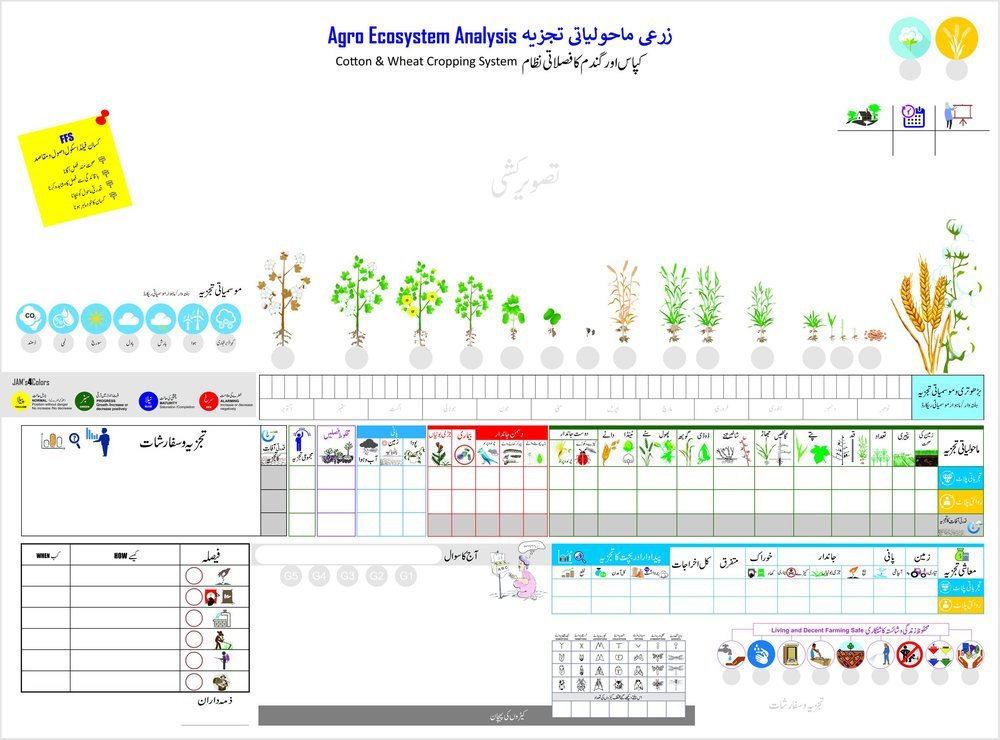
Empowering smallholders to observe, decide and lead change in their own fields.
Assignments delivered under programmes funded and administered by
Disclaimer: Organisations, programmes and projects are named only to identify where past assignments were delivered; this does not imply their endorsement of jamkhalid.com.
About the firm
From the field school to the firm.
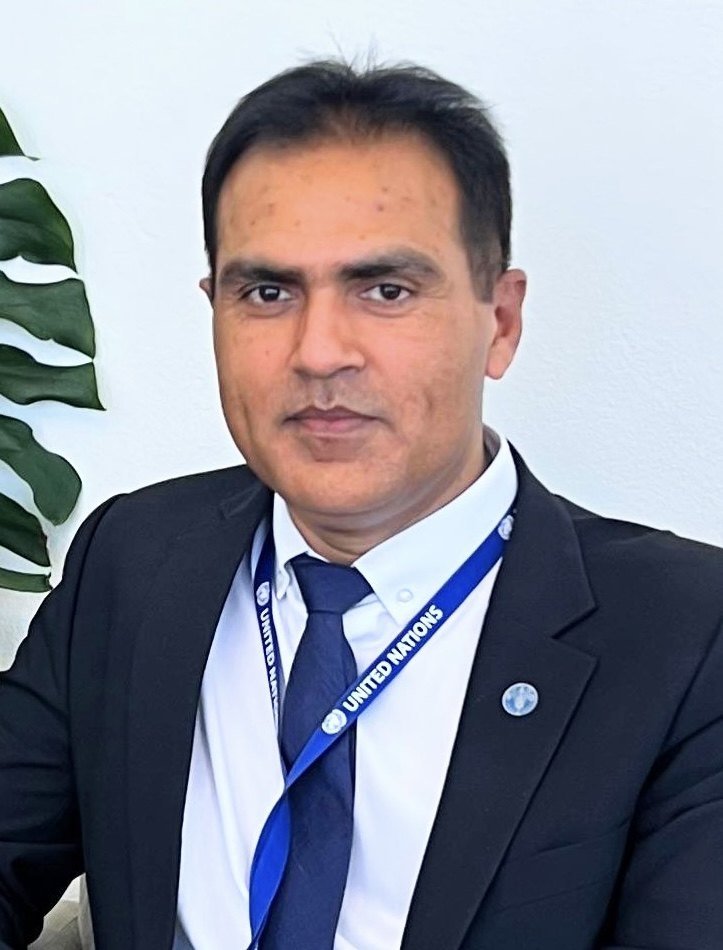
jamkhalid.com is run by Jam Muhammad Khalid, an agriculturist and climate change specialist who began as an IPM and Farmer Field School facilitator in 2002. He has supervised 6,400+ farmer and women’s field schools, led US$10 million of climate-smart adaptation packages for about 200,000 households, trained ministry officers as lead Master Facilitator in Jordan, Pakistan and Lao PDR, and written 27 climate-smart technology catalogues among 66 publications.
The firm carries that participatory discipline into a new chapter: digital services and technical advice that any programme can adopt.
- Best Employee Recognition AwardFAO, 2020
- Certified Master FacilitatorFAO Pakistan 2003, 2022 · FAO Jordan 2024 · FAO Lao PDR 2025
- Better Cotton (BCI) verifier/auditorSri Lanka, 2011
- Value Management Master FacilitatorUniversity of Canberra, 2017
- ISO 14001 and ISO 14067Environmental management and product carbon footprint, 2025
- Member, Global Farmer Field School ForumFAO · founding member of SOFT · Director of FIDA
- 2002Starts as IPM and Farmer Field School facilitator
- 2004–09National IPM Programme: 2,000 field schools, about 550 facilitators trained
- 2008Founding member of SOFT
- 2020–23GCF Indus Basin: US$10 million climate-smart packages for about 200,000 households
- 2024–26Lead Master Facilitator in Jordan and Lao PDR; CSA catalogues and digital tools
“Educating a farmer is as important as graduating a doctor!”Jam Muhammad Khalid
Services
Eleven services for programmes that cannot afford to guess.
Three ways to start.
Scope, duration and cost are agreed after a first conversation. There are no standard packages, because no two programmes are the same.
Advisory sprint
Two to four weeks: a programme review, a curriculum check or a technical opinion that has to survive a donor review.
Programme partnership
End-to-end design and delivery of an FFS or CSA programme, including digital tools, facilitator training and monitoring.
Retained advisor
Technical guidance across a programme cycle: monthly reviews, curriculum updates and field coaching.
Selected work
Track record in the field.
Assignments delivered by our founder for UN agencies, governments, donors and NGOs since 2000: field programmes, curricula, finance design, policy and digital tools.
References describe work led or delivered by Jam Muhammad Khalid in his roles with the organisations named.
Gallery
Where the work happens.
Field schools, facilitator training and partner workshops. Click a photo to see it full size.
Field-tested innovation
Tools farmers actually use.
Simple, low-cost instruments that let farmers observe, analyse and decide for themselves. Our digital services are built on them.
Jam's4Colors
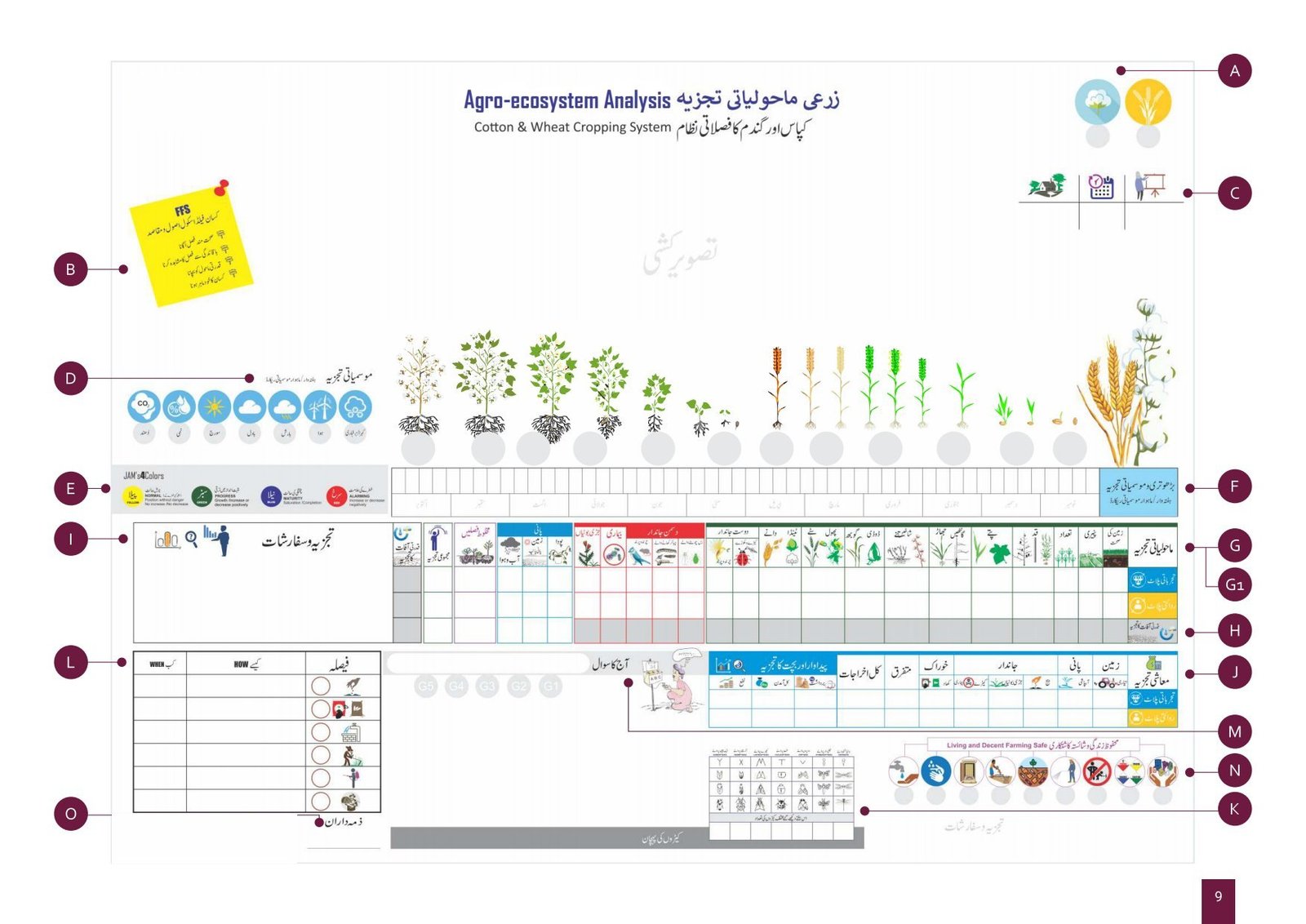
An analytical language for Farmer Field Schools. Four colours let a group read its field at a glance and decide together what to do next.
Selected among FAO-RNE’s top 20 innovations, 2020
How to read an AESA board
All 18 innovations, 2002–2026
Digital products
The products behind the services.
Built from field evidence, then handed to programmes. Both are open for pilot partnerships.

CSA Triple-Win Calculator
AgriClimate CBA, a cost-benefit app for climate-smart agriculture
Compares a climate-smart practice package with the farmer’s usual practice on the same plots, scores it on the three CSA pillars, and shows whether it pays.
- 142 CSA practicesIn 14 groups: water, soil health, adaptive varieties, IPM, agroforestry, livestock and fish, renewable energy, climate services, value chains and landscapes.
- Does it pay?Net present value, benefit-cost ratio, internal rate of return and payback, with multi-year cash flow in the local currency.
- Emissions and carbonIPCC Tier 1 estimates for methane, nitrous oxide and residue burning, plus guidance on readiness for voluntary carbon markets.
- Climate riskA climate risk simulator and extreme-weather checks show how the package holds up under drought, heat and flood.
- Built for the fieldFarmer-rated observations, voice field notes and offline maps. Works without a signal and syncs later.
- Seven report formatsFAO technical dossier, FFS field guide, climate-finance prospectus, ministry policy brief, farmer story, master trainer protocol and press release.
43 interface languagesAndroid and iOS (installable web app)Dashboard for programme managers
Method: Khalid, J.M. 2026. Climate-smart agriculture practice cost-benefit assessment tool, FAO; and Farmer Field School data recording and governance, CS-FFS curriculum Part 5 (2025). Dedicated to FIDA, SOFT and the Asian Field Schools Hub. An independent application, not reviewed or endorsed by FAO.
Request a demo or pilotWeakest pillar: mitigation. Add residue retention to strengthen it.
The package beats the farmer’s usual practice on all three pillars.
kg CO₂e per ha per season · IPCC Tier 1
Try the triple-win scoring
Illustrative demo with a score out of 12. The app scores each pillar from farmer records and field observations (CSA-CBA Form 01 and Form 02).
e-FFS Ecosystem
Online learning support, monitoring, evaluation and networking for Farmer Field School programmes
A hybrid system that helps facilitators, managers and practitioners run Farmer Field Schools well, with every school, session and learning plot visible in one place. It is built to keep working when the signal does not.
- Network directoryOrganisations, projects and facilitators, with roles for managers, supervisors, facilitators and co-facilitators.
- Field school registryClimate Business Field Schools, Women Open Schools, demonstration plots and ToF, with village profile, crops, livestock, irrigation and GPS location.
- Farmer membersProfiles with land holding and livestock, group leadership elections and sub-groups.
- Sessions and attendanceSession plans, session reports and attendance for every meeting of the school.
- Digital AESAField observations, analysis and group decisions on water, weeds and pests, with photos of the AESA board.
- Learning plots and experimentsLearning and control plots, field experiments such as minus-one-element tests, and cost-benefit analysis of every plot.
- Farmer skillsPractical skills tracked by session: seed germination test, soil sampling, farm layout, weather forecasting, pest scouting and more.
- 17-step SOP trackerFrom area selection and Training of Facilitators to field days and exchange visits, each step with a checklist and evidence.
- Learning and knowledgeKnowledge bank and online FFS courses, linked to the FAO Global FFS Platform.
- Online curriculum builderDesign and adapt season-long FFS curricula online, session by session, for any crop or livestock system.
- Climate-smart fertiliser calculatorNutrient doses matched to crop, soil and yield target, cutting cost and emissions.
- Chat BoxGroup chat for the farmer members of each field school, and organisation-wide chat among facilitators, master facilitators and managers.
- FFS community networkLinks members with graduates, facilitators and field schools across districts and countries.
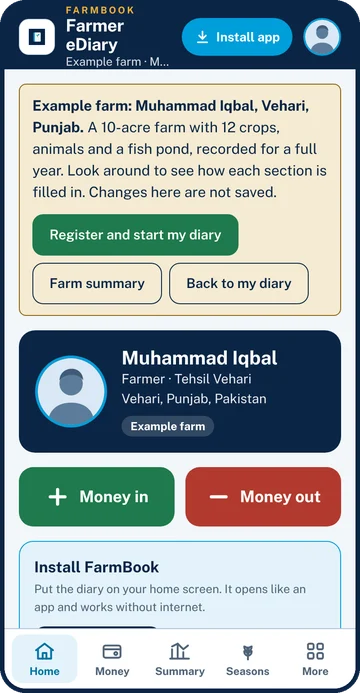
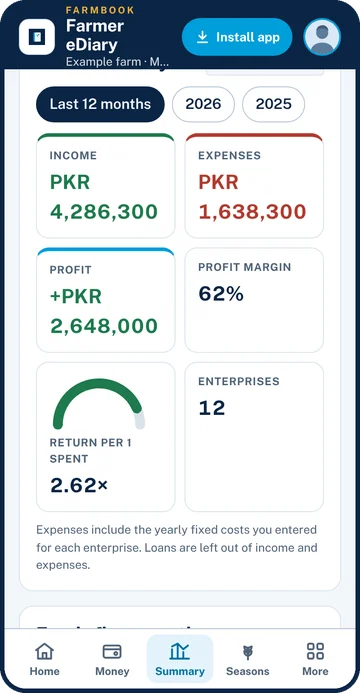
- Farmer’s digital diaryFarmers record field operations, costs and observations through the season.
- Agribusiness plans onlineStep-by-step business plans for farmers and producer groups, ready to share with lenders and buyers.
- Climate-smart marketplaceFarmers find and compare climate-smart tools, inputs and technologies from suppliers.
- And moreNew services added as the Farmer Field School community asks for them.
Idea by Jam Muhammad Khalid. First prototyped in 2023 for the FAO–GCF project “Transforming the Indus Basin with Climate Resilient Agriculture and Water Management” (GCP/PAK/146/GCF), Pakistan, building on the first e-FFS developed with SOFT and ACIAR in 2017.
Discuss a pilotKnowledge
Curricula, catalogues and field guides.
66 publications, most of them free to read. The latest come from the 2026 climate-smart agriculture catalogue series.
Insights
Notes from the field.
Blog posts and updates from jamkhalid.com and its social media.
Global network
Climate-Smart Champions
Experts who help smallholders adapt, field by field. Join the jamkhalid.com network to be found by programmes, partners and peers across the world.
- 1Apply onlineShare your profile, skills, location and social accounts.
- 2Reviewjamkhalid.com checks every application, usually within 10 working days.
- 3PublishedOnce approved, your profile is listed in the network directory on this site.
Questions
Before we talk.
Who are these services for?
Government extension departments, UN agencies, donors, NGOs, agribusinesses and producer organisations that work with smallholder farmers and need programmes that hold up in the field.
Can you help us prepare a funding proposal?
Yes. Concept notes and full proposals for the Green Climate Fund, GEF, IFAD, the World Bank and bilateral donors, including the theory of change, results framework, budget and safeguards. The founder has designed and developed 26 projects; see the full list on the Projects page.
Do you work directly with farmers and producer groups?
Yes. Agribusiness plans, producer group formation and Farmer Business Schools are delivered in the field, alongside climate-smart village profiles prepared with the community.
Can the digital tools work where connectivity is poor?
Yes. The e-FFS Ecosystem is offline-first: facilitators record sessions, AESA and plot data in the field, and records upload when a signal returns. The CSA Triple-Win Calculator installs on Android and iOS phones.
Can curricula and training be adapted to our crops and language?
Yes. Existing curricula cover cotton–wheat, rice, orchards, vegetables, hydroponics, livestock and homestead gardens, and have been delivered in Pakistan, Jordan and Lao PDR, in English and Urdu with local translation.
How does an assignment start, and how is it priced?
After a first conversation we agree the scope, duration and cost. There are no standard packages. An advisory sprint can usually begin within two to three weeks.
Start a conversation
Tell us what you are trying to solve.
Include the country, the programme and roughly how many farmers or field schools you reach. We reply within two working days.